
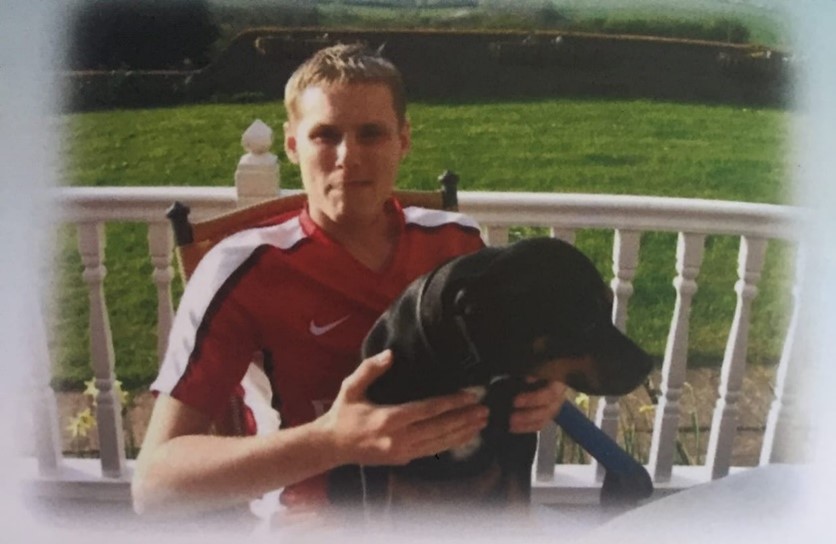
18 Dec Inquest concludes that the death of Daniel Short at Glogan House Approved Premises was contributed to by neglect
1-8 December 2025
Somerset Coroner’s Court
Before HM Assistant Coroner Vanessa McKinlay
At the inquest into Daniel’s death, a jury found that actions taken by Glogan House staff were ineffective and there was a significant delay in seeking basic medical attention for Daniel when he clearly required support. The staff acted in contravention of their training and in doing so, contributed to Daniel’s death.
Due to extremely lengthy delays at Somerset Coroner’s Court, Daniel’s inquest took place over 6 years after his death on 14 August 2019.
At around 11pm on 13 August, Daniel was found by Glogan House staff apparently under the influence of drugs and unresponsive. Action was not taken to call an ambulance for over 1 hour. The jury found that Daniel probably would have been saved had staff simply called an ambulance and the failure to do so meant that Daniel’s death was contributed to by Neglect.
Daniel was a well-loved father of 3, a son, a grandson and a brother. He was only 33 years old when he died at Glogan House.
Daniel was involved in a serious motorbike accident in his twenties and started self-medicating with drugs to manage his pain. His mum told the jury that his drug dependence spiralled and “completely took hold of him”.
On 23 July, Daniel was released on licence from HMP Parc. Daniel was required to reside at Glogan House Approved Premises in Bridgewater. Glogan House is accommodation managed by the National Probation Service.
When Daniel arrived at Glogan House, he was known to have a history of drug dependence and as part of his licence conditions was subject to drug testing. However, at the time staff knew that the drug testing kits at Glogan House were faulty and giving off false positives. This meant that Daniel was not drug tested after 5 August. His Probation Offender Manager told the jury that she was not aware that Daniel was not being drug tested and if she had been made aware she would have implemented alternative arrangements to monitor him.
On 13 August, at 11:01pm, Daniel was found in his room at Glogan House unconscious and unresponsive. He was on all fours, but breathing. The new staff member who found Daniel raised the alarm but the senior staff member believed he was intoxicated and had taken ‘spice’. Less than 1 minute was spent with him with the senior staff member just glancing in from the corridor. They said they then decided to leave him on his own for 20 minutes before checking on him again, but CCTV showed it was actually 46 minutes before they looked in on him again.
At 11.47pm, Daniel was found in the same position and was still unresponsive. Again, both staff members decided to leave Daniel on his own and return to their office. At around midnight, the staff members called their duty manager who advised them to call an ambulance straight away.
Finally, the staff members called an ambulance at 00:04am. The ambulance dispatcher asked them to return to Daniel straight away and see if he was breathing. At 00:09am the staff members had returned to Daniel, but did not confirm whether or not he was breathing for a further 3 minutes. Contrary to the instructions of the ambulance dispatcher, staff refused to do mouth to mouth also then delayed in starting CPR. The reasons the staff gave was due to the small size of Daniel’s room and a reluctance to do so. The paramedics attended at 00:14am but Daniel was asystolic and sadly pronounced deceased at 00:42am.
The jury heard evidence from an independent expert, Dr Nigel Langford who is a Consultant in Clinical Pharmacology and Therapeutics and Acute/General Physician. Dr Langford told the inquest that Daniel was suffering the effects of an overdose at 11.01pm and an ambulance should have been called immediately. He told the jury that if an ambulance had been called and attended before Daniel’s cardiac arrest, then it is more likely than not Daniel would have survived. Paramedics would have administered Naloxone, which Dr Langford told the jury was effective in reversing the effects of a drug overdose if administered before cardiac arrest. Dr Langford said that the main factor that could have saved Daniel’s life would have been to administer Naloxone as soon as possible.
At the time of Daniel’s death, Naloxone was not available at Glogan House. Previously, Glogan House had an arrangement with a local substance misuse service who provided them with Naloxone and trained staff in how to administer it. However, in November 2018, all Approved Premises in England and Wales were ordered by the National Probation Service to stop administering Naloxone. Last year, this decision was finally withdrawn and Approved Premises are once again now allowed to administer Naloxone. The jury found that if Naloxone had been available at the time of Daniel’s death, it may have had a positive impact on his recovery.
Following the inquest conclusion, Deborah Cox, Daniel’s mother said:
“It is difficult to find the words to describe the feeling of knowing that your child was needlessly left to die alone without any regard for his life. If only an ambulance had been called when he was first found, if only they had followed their training, if only help was called for immediately on returning to check him, if only Naloxone was available… Sadly the future lives of his family will forever be filled with “if only’s”. Daniel’s death was preventable and I hope another family never have to go through such a devastating loss caused by neglect.
I am thankful to INQUEST and my lawyers at DPG Amalia and Rachel and Kate Stone of Garden Court North Chambers who have provided unwavering support during the last very painful 6 years. They also took Daniel’s 20 year old daughter under their wing during the actual inquest, always discussing everything with us and explaining fully anything we didn’t understand”
Rachel Tribble, of Deighton Pierce Glynn, representing Daniel’s family said:
“Daniel’s family have had an extremely long wait to find out what happened to him. From the day they found out the circumstances around when Daniel was found and left for over an hour, they have always questioned why no staff member called for an ambulance for him. It has taken over 6 years for them to be able to ask that question. Unfortunately, they still did not get a proper answer, but the Jury were clear this delay amounted to Neglect. Daniel was completely reliant on Approved Premises staff that night and unfortunately, he was profoundly let down. The evidence was that Daniel’s death could have been prevented”.
ENDS
Daniel’s family are represented by INQUEST Lawyers Group members Amalia King and Rachel Tribble of Deighton Pierce Glynn, and Kate Stone of Garden Court North Chambers. Daniel’s family are also supported by INQUEST caseworker Selen Cavcav.
Other Interested Persons represented at the inquest: the Ministry of Justice on behalf of Glogan House.
Share this story


