
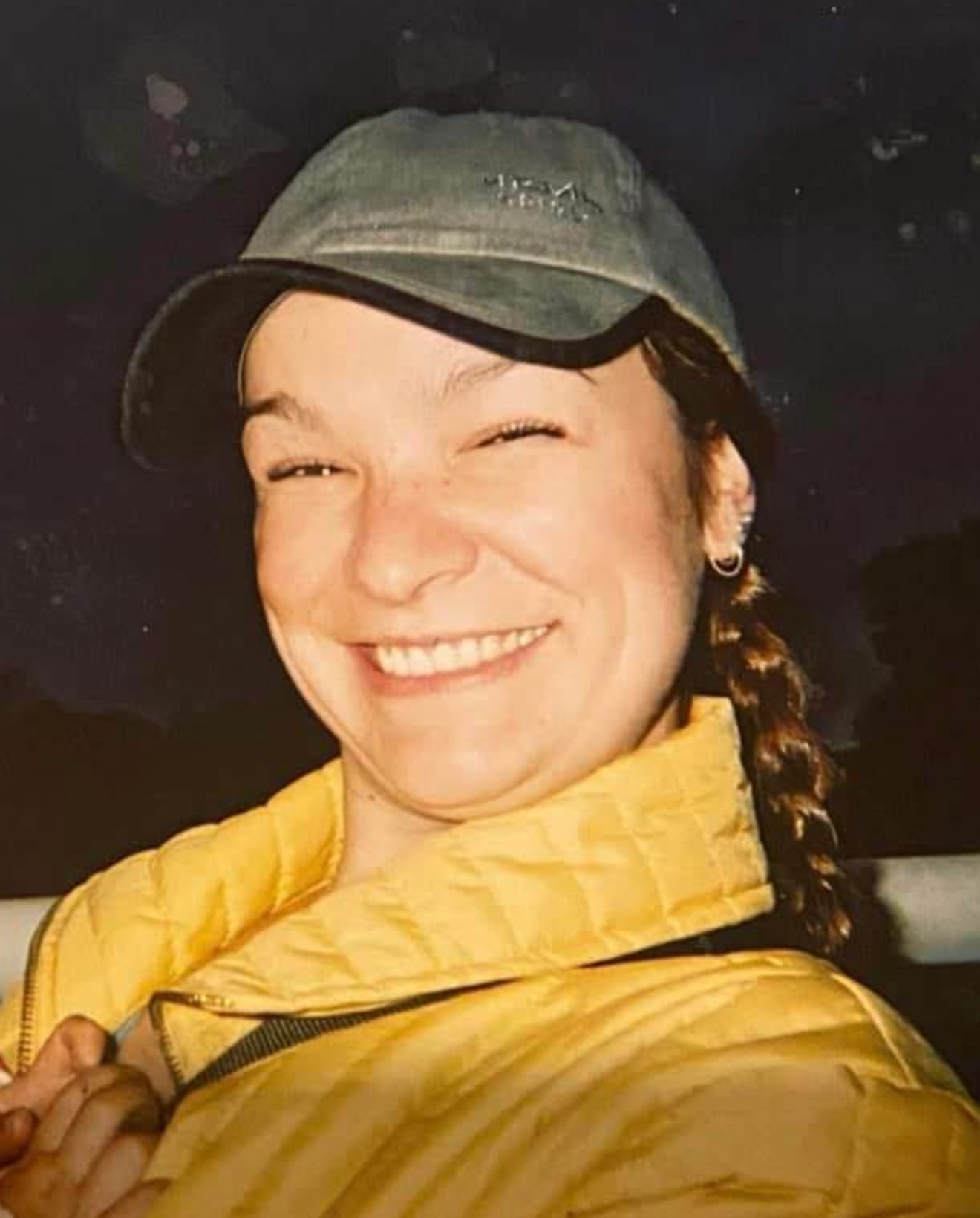
18 Mar Inquest Jury Concludes ‘Delay in Detection of Fire’ Contributed to Death of Clare Dupree at Hmp Eastwood Park
Clare’s death at HMP Eastwood Park in 2022 highlights continuing fire safety failings across prison estate.
CONTENT WARNING: This article contains themes of self-harm and a very serious fire incident.
On 17 March 2026, an inquest jury concluded that Clare Dupree, a 48-year-old mother of six, ‘died from sustained inhalation of smoke due to a delay in detection of fire as a result of arson’.
The jury identified that the prison’s reliance on domestic smoke detectors placed outside cells, rather than an automatic fire detection system (AFD) inside cells, may have contributed to Clare’s death: ‘The lack of AFDs caused a delay in alerting staff to the fire in Clare’s cell.’
Clare died two days later in hospital.
Clare was the third person to die at HMP Eastwood Park in 2022. Left behind are Clare’s six daughters, her mother and her three siblings, who have been devastated by her loss. Deighton Pierce Glynn also acted for the families of Kay Melhuish and Taylor Atkinson.
Fire safety failings at HMP Eastwood Park were identified by inspectors in 2015, seven years before Clare’s death, resulting in a commitment to install automatic fire detection devices inside cells. These devices were not in place on Clare’s wing at the time of her death. Instead, her wing was reliant on battery powered standalone smoke detectors – of the kind used in private homes – placed outside the cells.
Sequence of events
In the late afternoon of Boxing Day 2022 (26 December), Clare is believed to have set a fire in her cell using a vape pen. Her family do not believe she wanted to die and there is no evidence that was the case.
It is unknown exactly how long it took before the fire was detected but the inquest heard evidence of a significant delay. The CCTV outside Clare’s cell was not working.
Several of Clare’s fellow prisoners testified that the fire could have been burning for up to 15 minutes before staff became aware. The prisoner in the cell next to Clare’s recalls hearing Clare screaming “I’m on fire” and her own cell beginning to fill with smoke.
At 16.40, officers were alerted by a smoke detector located outside Clare’s cell. They responded by inundating the cell with water misting in line with guidance.
One officer called for assistance over the radio but did not inform colleagues that there was a fire. Another officer’s radio battery was flat. It was acknowledged by the prison that they were short staffed on the wing that day.
After the smoke detector was triggered, another prisoner triggered a fire alarm which should have sent an alert to the fire alarm panel in the control room. However, the inquest heard that technical issues relating to a false alarm earlier in the day and lack of staff understanding of the fire panel meant they could not see the alert for the fire.
As a result, the fire brigade were not called until six minutes after the fire had first been detected, after an officer reported the fire to the prison gate. Following attendance by the fire brigade, they were able to open the cell door and remove Clare 33 minutes after the fire was initially discovered. Clare subsequently died in hospital from injuries resulting from smoke inhalation.
An inspector from the Crown Premises Fire Safety Inspectorate told the inquest that a cell fire can cause injury within six minutes, unconsciousness within seven minutes and death within eight minutes. None of the prison staff who gave evidence reported hearing Clare from inside the cell, suggesting she was already unconscious by the point at which they responded to the fire.
In relation to the post fire-detection response, the jury concluded: ‘Staff omitting to say there was a fire via the radio and the issues with the fire panel caused delay in contacting the fire service. However, this is unlikely to have contributed to Clare’s death.’
Clare’s incarceration
Clare was remanded to HMP Eastwood Park on 11 May 2022. It was her first time in custody. She was released into the community on 10 August 2022 but arrested again on 17 November 2022, returning to HMP Eastwood Park on 19 November 2022.
Clare had a history of significant mental health vulnerabilities which meant her behaviour could be bizarre and erratic when she was unwell.
In 2013, her long-standing diagnosis of bipolar was changed to personality disorder (EUPD), which affected the way she was treated. The inquest heard evidence from Dr Inti Qurashi, an independent Consultant Forensic Psychiatrist instructed by the Coroner, that in his view Clare was misdiagnosed with EUPD and that her previous diagnosis of bipolar was correct. He expressed a concern that ‘diagnostic foreshadowing’ meant that the diagnosis of EUPD was simply accepted and not critically reviewed at a later point in Clare’s care.
During her imprisonment, Clare was referred three times for assessment for transfer to a Psychiatric Intensive Care Unit (PICU) in hospital, twice during her first period in custody and once during her second period in custody. On each occasion, the Consultant Psychiatrist assessing Clare reached the decision that Clare did not meet the threshold for transfer to hospital.
In respect of the first two referrals, Dr Qurashi gave powerful expert evidence that Clare should have been transferred to hospital. In addition, that there was a real prospect that with effective treatment and a holistic care package Clare’s trajectory back to prison could have been averted. Dr Qurashi said prisons are entirely wrong environment to treat people who are experiencing severe mental illness. The jury found in their conclusions that it was a “failure” that Clare was not transferred to hospital and a “missed opportunity”.
While in the community from 10 August to 17 November 2022, Clare continued to experience psychosis and delusions, including recurring beliefs that her family, including her children, were dead. On 9 September 2022, Clare attended A&E reporting suicidal and disturbing thoughts and disclosed that she had made two attempts on her life. Despite this, she was not reviewed by a psychiatrist while in the community.
Shortly after Clare’s re-imprisonment, she was put on the prison’s system for monitoring self harm and suicide (ACCT). The inquest heard that there were a plethora of shortcomings in the ACCT process. The care plan remained largely blank, no support actions were ever documented and no action was taken to involve Clare’s family in keeping her safe.
Fire safety in prisons
The deficiencies in fire safety and detection on Clare’s wing at Eastwood Park are not an isolated problem. In advance of the inquest, the Ministry of Justice made a series of admissions. Firstly, the Ministry of Justice has determined that in-cell automatic fire detection is necessary to minimise the risk of life-threatening harm from fires.
The Ministry of Justice also acknowledges that the use of domestic smoke detectors as a mitigating measure is a less effective way of minimising fire risks than in-cell AFD.
In respect of Eastwood Park, in the seven years from the 2015 inspection to Clare’s death in 2022, no progress had been made towards installing AFDs on Clare’s wing. To date, AFDs have not been installed on four of the ten residential units at the prison. The Ministry of Justice gave evidence at the inquest that currently the start date for works will be June 2026, with completion expected by 2028. It was acknowledged there has been slippage in these timeframes.
The inquest also heard that the source of ignition was a modified vape pen, which Clare appears to have used to set a fire in her wardrobe. Three years after Clare’s death, in 2025, safer vape pens were introduced across prisons. These vape pens can no longer be modified in the same way and evidence was heard that no fires have been set using the new vape pen. Prior to their introduction, it is understood from evidence given in the inquest that around 90% of fires in prisons across the country were started with modified vapes.
The prison admitted that the wardrobe in Clare’s cell was non-standard and had been commercially sourced in 1998, meaning it did not meet the higher fire-retardancy standards required in the prison environment. Witnesses were unable to explain why the furniture on Clare’s wing had not been identified as not meeting relevant standards, and the Fire Officer at HMP Eastwood Park said she was unaware of the furniture issue until after Clare’s death.
Clare’s family have been represented by Clare Hayes and Betty McCann at the inquest, who say:
Women’s prisons are not safe spaces and prison was not the right place for Clare. Her family have had to endure harrowing evidence that Clare’s pathway back to prison could have been avoided had she received the wraparound mental health care and support that she desperately needed.
Instead, Clare was imprisoned on a wing at Eastwood Park with deficient fire safety systems. The Crown Premises Fire Safety Inspectorate is clear that automatic in-cell fire detection is the “minimum standard” for fire safety in prisons. Yet over three years on from Clare’s death, it will not be until June of this year that work begins to put AFDs into all cells at HMP Eastwood Park.
When the risks are so high, and the window of time in which prisoners can be safely removed from a cell fire so small, this is simply not good enough. Fire safety in prisons needs to be a priority for the Prison Service to prevent any more tragic deaths in cell fires.
Clare’s family has given an interview to the Guardian which is available here.
If you are feeling low, Samaritans are here – day or night, 365 days a year. You can call them for free on 116 123, email them at jo@samaritans.org, or visit www.samaritans.org to find your nearest branch.
Notes for media: Please refer to the Samaritans guide on reporting inquests: https://www.samaritans.org/about-samaritans/media-guidelines/guidance-reporting-inquests/
ENDS
NOTES TO EDITORS
For further information and to note your interest, please contact Clare Hayes or Betty McCann of Deighton Pierce Glynn Solicitors, solicitors for the family: CHayes@dpglaw.co.uk and BMcCann@dpglaw.co.uk, 020 7407 0007
The family is represented by Ceri Lloyd-Hughes, Clare Hayes, Betty McCann and Maja Pegler of Deighton Pierce Glynn Solicitors and Nick Armstrong KC and Robbie Stern of Matrix Chambers.
Other Interested Persons represented are HMP Eastwood Park/Ministry of Justice, Avon and Wiltshire Mental Health Partnership NHS Trust, Practice Plus Group, Cardiff and Vale University Health Board and the Crown Premises Fire Safety Inspectorate.
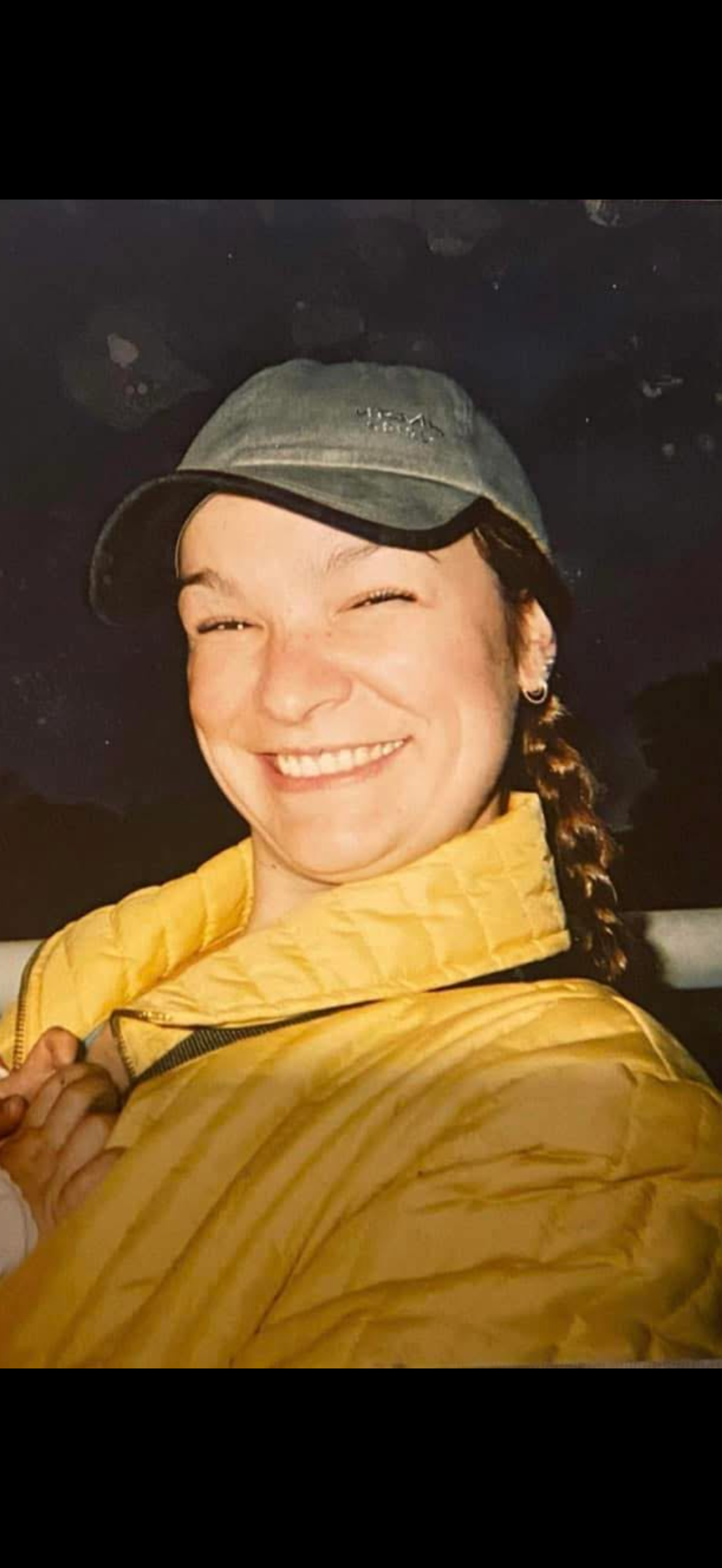
A photo of Clare for media use is available here.
Share this story


