
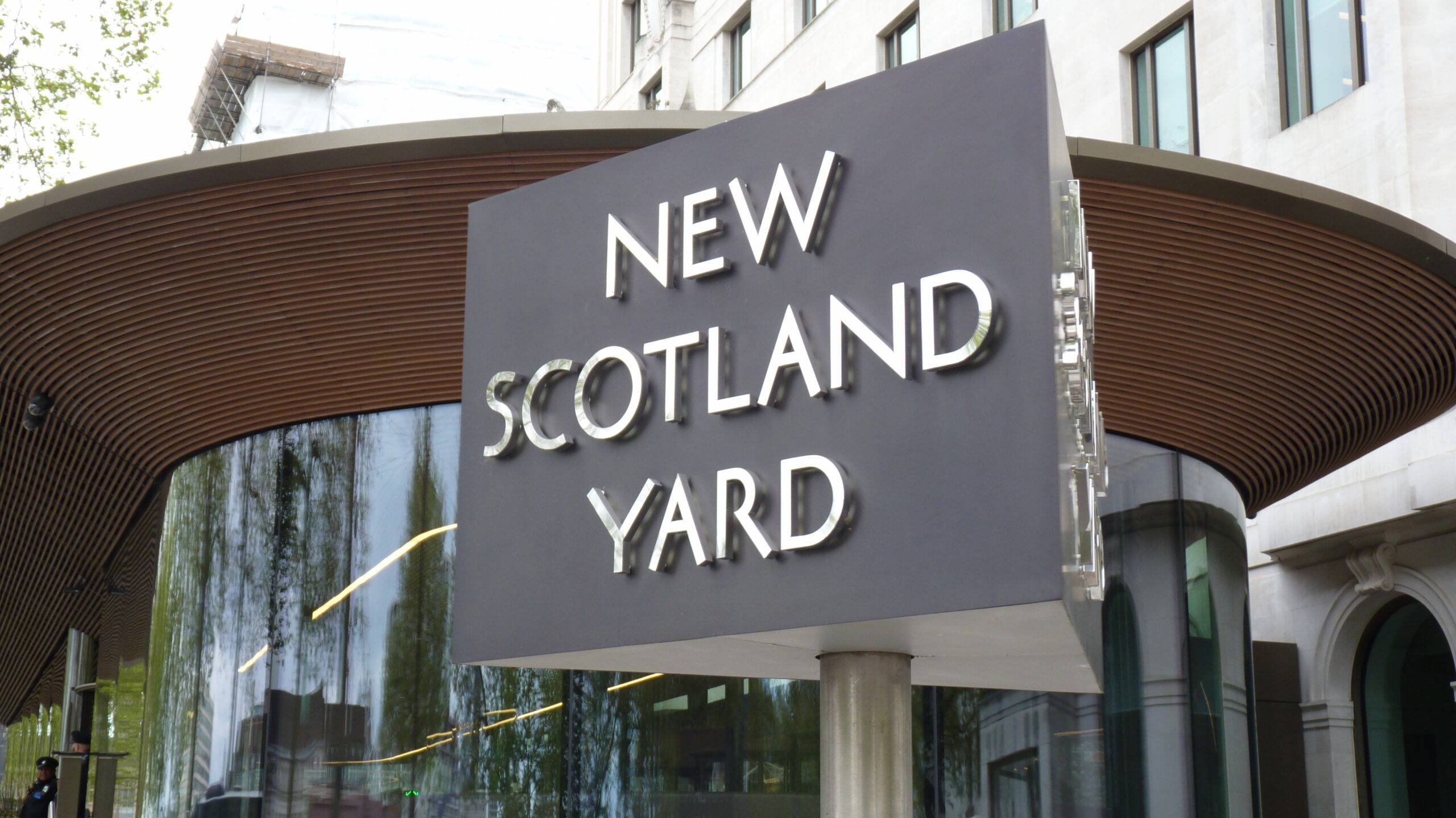
06 Feb Racial Discrimination by the Police: The Institutionalism of Racism in UK policing
Over the years, policing in the UK has invited much scrutiny from various minoritised groups, stemming from discrimination by the police based on race, sex, disability and other protected characteristics. For many communities in the UK, racism by the police has been a longstanding issue pointing to discriminatory cultures, systems, and norms that influence the way people are treated.
This ongoing institutional racism, such as that recently highlighted by the BBC Panorama investigation into Charing Cross police station in London and the Baroness Casey Review, has led to a continued decline in public trust and confidence in policing, particularly amongst racialised communities.
What is Institutional Racism?
Institutional racism is defined by the Institute of Race Relations simply as “when a whole organisation’s procedures and policies disadvantage BME people”[1].
In other words, it is when the systems, practices and cultural norms of an institution promote, enable and perpetuate racial discrimination.
For decades, institutional racism has been central to discussions around racial discrimination by the police. One cannot explore race discrimination by the police without first recognising the deep-rooted racism intertwined in the cultures of police institutions. The term institutional racism was first coined by American activists Stokely Carmichael (Kwame Toure) and Charles V. Hamilton in 1967[2]. In their book ‘Black Power: The Politics of Liberation in America’, they explain how institutional racism though more covert and subtle than direct racism, is still just as destructive.
The notion of institutional racism gained significant traction in the UK following the racist murder of Stephen Lawrence and the attack on Duwayne Brooks[3], the gross failures of the police investigation of it, and the subsequent Inquiry into the conduct of the Metropolitan Police Service (“MPS”). The 1999 report of the Inquiry[4], commonly referred to as the ‘Macpherson Report’, found the MPS to be institutionally racist. Like Carmichael and Hamilton, the report also referred to the subtleness of institutional racism and the influence that this can have on the delivery of police services. The report highlighted the need for police forces to carefully examine their policies and practices to ensure they do not promote and perpetuate patterns of discrimination.
Over 25 years later, racial discrimination by the police is still prevalent, as evidenced by the Casey Review in 2023[5]. Baroness Casey found that “Black Londoners in particular remain over-policed”: they are more likely to be subjected to arrest, stop and search, handcuffing and tasering by the police, resulting in their overrepresentation in the criminal justice system. Casey further found that, over two decades after the MacPherson Report, the MPS was still institutionally racist. No Commissioner of the MPS since the MacPherson report, including the current Commissioner, has accepted that the MPS is institutionally racist.
The continued findings of institutional racism over 25 years after the Macpherson Report, and repeated failures of the MPS to recognise these findings, illustrate just how embedded institutional racism is within the force.
The Law
The key legislation governing race discrimination in a policing context in England and Wales is as follows (although this is not an exhaustive list):
- The Equality Act (EA) 2010;
- The Human Rights Act (HRA) 1998;
- The Police and Criminal Evidence Act (PACE) 1984.
The Equality Act[6] prohibits discrimination (direct and indirect), harassment and victimisation on the basis of ‘protected characteristics’, which includes race.
The Human rights Act 1998[7] gives effect to the ‘European Convention on Human Rights’ (“ECHR”) in England and Wales. The ECHR protects a broad range of fundamental rights including the right not to be discriminated against on the ground of race by any public authority, such as the police (Article 14 ECHR).
The Police and Criminal Evidence Act 1984 (“PACE”)[8] is specifically tailored to the police and includes Codes of Practice which officers are required to follow when performing their policing duties. PACE Code A governs the use of police stop and search powers and states that “reasonable suspicion can never be supported on the basis of personal factors.” This means that unless the police have information or intelligence providing a description of a suspected person for which there is a power to stop and search, personal factors such as race cannot be used as a reason for stopping and searching someone. Additionally, racialised generalisations and stereotypes cannot form the basis of ‘reasonable’ suspicion. This is similarly prohibited by the Equality Act and Human Rights Act.
However, despite the existence of the above legal provisions, many people still experience racial discrimination by the police, as well as the lack of protection from it.
Facts and Figures
Recent statistics provide stark evidence of race discrimination in policing today:
- Amnesty International 2025: “Almost three-quarters of police forces attempt to predict crime by racially profiling communities across the UK.”[9]
- IOPC 2024: “Individuals from a Black or Black British background were searched at a rate 5 times higher than that of those from a White ethnic group.”[10]
- INQUEST 2023: “Black people are seven times more likely to die than White people following the use of restraint by police.”[11]
Conclusion
Racial discrimination by the police is not limited to direct racism but can stem from institutional racism. Institutional racism derives from a history of oppression which has produced systems, including within police forces, that have normalised and maintained racial inequality and discrimination in society.
The College of Policing in 2021 stated that “There is more to be done including building confidence in the police, especially among Black, Asian and minority ethnic communities”[12].
So how do we go about promoting change? There are many ways that change can come about. Based on our experience of acting in cases concerning racial discrimination by the police, we suggest an approach consisting of Acknowledgement, Reconstruction and Education:
- Acknowledgement and admission from police officers and forces, of the existence of institutional racism within UK policing and their part to play in it;
- Reconstruction and reform of police institutions, starting from recruitment and filtering through to every rank of the police force; and
- Education and training on racism, institutional racism and the cultural structures that incite racism.
Institutional racism in UK policing cannot be perceived as an abstract concept and needs to be seen for what it is – a reality. Until then, race discrimination will remain embedded in the culture and structures of UK policing – forces will keep harming communities and public confidence in the police will continue to plummet.
This blog post was prepared by Chioma Nwani with contributions from Lana Adamou, Megan Smith and Emily Soothill. It is for general information and is not intended to be used as legal advice.
[1] https://irr.org.uk/research/statistics/definitions/
[2] Black Power: The Politics of Liberation in America, Kwame Toure & Charles V. Hamilton [1967]
[3] https://www.bbc.co.uk/news/uk-23048266
[4] The Stephen Lawrence Inquiry, Sir William Macpherson [24 February 1999]
[5] Final Report: An independent review into the standards of behaviour and internal culture of the Metropolitan Police Service, Baroness Louise Casey [March 2023]
[6] https://www.legislation.gov.uk/ukpga/2010/15/contents
[7] https://www.legislation.gov.uk/ukpga/1998/42/contents
[8] https://www.legislation.gov.uk/ukpga/1984/60/contents
[9] https://www.amnesty.org.uk/press-releases/uk-police-forces-supercharging-racism-crime-predicting-tech-new-report
[10] Race Discrimination Report, IOPC [November 2024]
[11] https://www.inquest.org.uk/police-racism-report-2023
[12] Macpherson report: 22 years on, College of Policing [29 July 2021]
Share this story


